
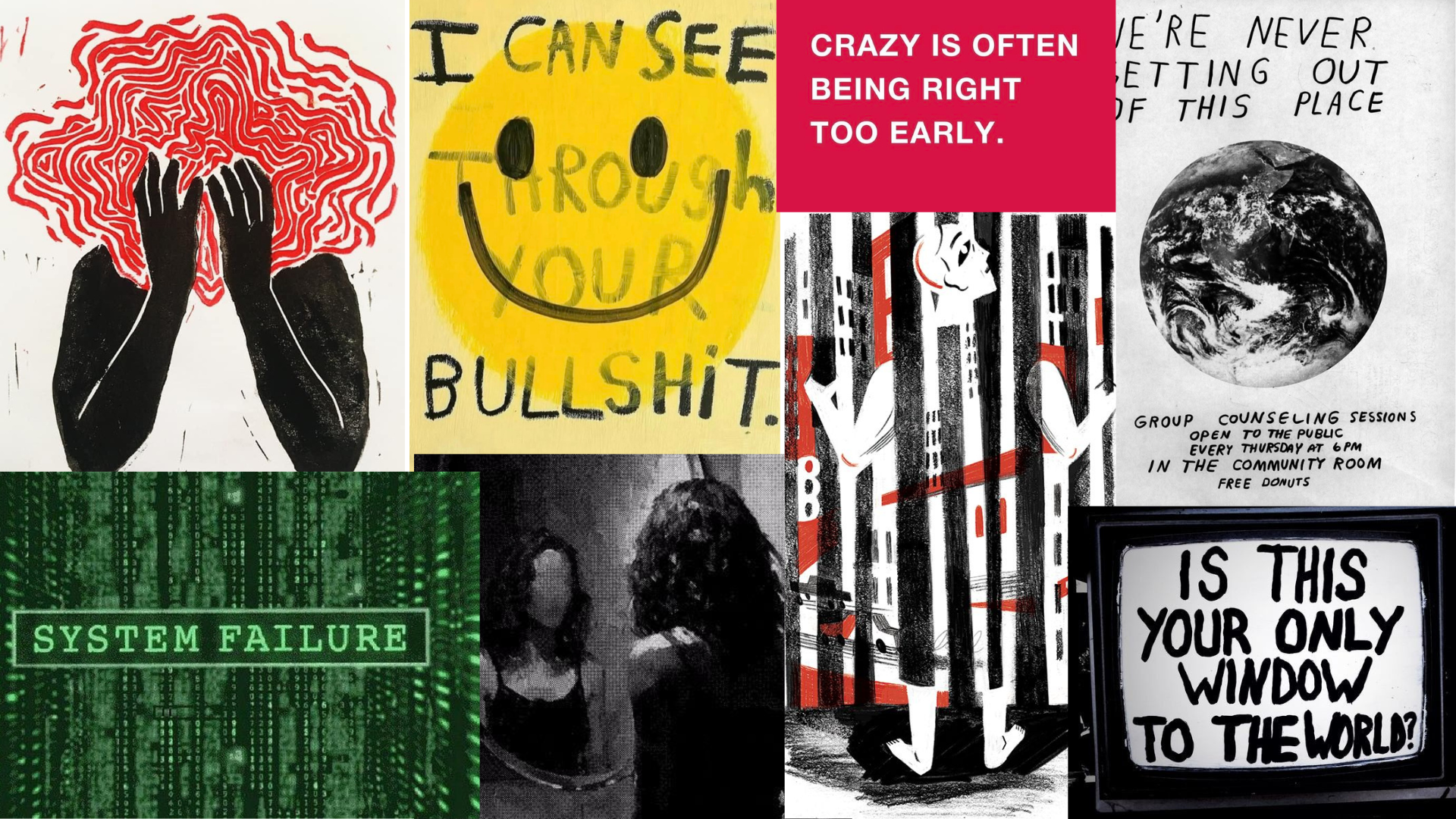
There is a specific kind of silence that settles over you when you realize you are no longer in control of your own life.
It doesn’t happen all at once. It happens slowly — through paperwork, through waiting, through being told to come back tomorrow. Through emails that go unanswered and systems that don’t speak to each other. Through decisions being made about you, without you.
And then one day you realize: you are inside something.
I am currently living inside New York City’s shelter system. Not passing through it — inside it. And what I have come to understand is this: homelessness, at least here, is not just a condition. It is a structure. It is a system that does not simply respond to crisis — it extends it.
We are told that shelters are temporary. That they are a bridge. A safety net.
But a safety net with holes is not a safety net. It is a trap.
a safety net with holes is not a safety net. It is a trap.
What is most striking is not just the system itself — it’s who is inside it. The women around me are not who you think. They are young. Focused. Ambitious. Still actively building their lives — even here.
A girl studying for her GED, determined to finish what she started.
A woman working for the city, showing up every day, doing everything “right.”
A nurse — caring for others, while navigating a system that cannot care for her.
Another training to become an airline pilot — still mapping out a future that requires precision, discipline, and belief. A writer negotiating a book deal. A former professor. Women with résumés, with goals, with plans that did not account for this.
This is not a population that has given up. This is a population being held in place. Alongside them are women who are deeply unwell — navigating schizophrenia, dementia, profound trauma. Women who require care that this environment is not equipped to provide. And so everyone is placed together, collapsed into the same space, under the same rules, with the same lack of support.
It is not care. It is containment and the longer you stay, the more it changes you. Time distorts. Days are structured around compliance. You wait to be called. You wait for approvals. You wait for systems to move that do not move. You begin to understand that exit is not based on readiness — it is based on process. And the process is unpredictable.
I came into this system as someone who has built a global business. Someone who understands operations, systems, negotiation. Someone who knows how to move things forward.
None of that matters here. Because this is not a system designed for movement. It is a system designed for management.
Homelessness does not look like what people think it looks like. It is not always visible. It is not always disheveled or distant. Sometimes it looks like a young woman studying late at night under fluorescent lights. Sometimes it looks like someone heading to work in the morning, caring for others, while carrying everything she owns in a single bag.
Sometimes it looks like a future that is still trying to exist. Sometimes it looks like me.
And what I am beginning to understand — and what SP1NSTER has always understood — is that independence is not just a personal achievement. It is structural. It requires systems that allow you to move, to act, to recover.
When those systems fail, independence becomes fragile When enough people fall through at once, it is no longer personal failure. It is design.
Poverty is expensive. Homelessness is expensive.
Poverty is expensive...
And both, increasingly, feel like they are operating exactly as intended. Because the cost is not just financial.
It is mental.
It is emotional.
It is time.
This system exhausts time. Days lost to waiting. Weeks lost to process. Months lost to delays that have no clear explanation. And while you are waiting — while your life is paused Your time is absorbed into a system that benefits from your stagnation. The longer you remain, the more the system is sustained. It begins to feel less like support and more like containment — a structure where your movement is restricted, your progress delayed, and your presence accounted for. Not unlike other systems where institutions are funded by keeping people inside them, your existence here carries value — but not for you. Time you cannot get back. Time you cannot reclaim. Time that keeps you exactly where you are. You are not being supported. You are being held. Sometimes it looks like a future that is still trying to exist. Sometimes it looks like me.
I always knew that I was an activist. But I didn’t come enter the shelter system with the intention of becoming the voice for people who don’t have one. I came here because I needed help. What I found was that help does not exist. I reached out. I reached up. I tried to navigate the system quietly, patiently — believing that if I followed the process, the process would move me forward. It didn’t.
What I realized — slowly, and then all at once — is that I was never going to get out by waiting for the system to help me. Because the system does not respond to patience. It consumes it.
I entered with patience. I was asked to extend more. More time. More understanding. More restraint. A level of patience that began to feel less like a virtue and more like a requirement — one that came with no clear path to resolution, only delay. And with each extension, something shifted. For me, every measure of patience dispensed was replaced with something else:
clarity, urgency — and yes, rage.
Not chaos. Not loss of control. Direction. Because I had done what you are supposed to do. I tried to handle my issues internally. Then I moved outward — along the perimeter of the agencies meant to support me. When that failed, I became more targeted. I reached out to the Coalition for the Homeless.
The Office of the Ombudsman. The office of Gale Brewer. The office of Yusef Salaam. The Office of the Public Advocate.
I attended an inauguration event and introduced myself — explained my situation, handed over my number, asked for help to be passed along.
I followed leads. I leveraged contacts. I made myself visible. And still — nothing moved. Every attempt collapsed into the same outcome: a stack of paperwork, an inbox filled with generic responses, or silence.
That is when it became clear: This was not a series of isolated failures. This was system failure. A failure of agencies. A failure of oversight. A failure of government to function in the way it promises to. And the emotional cost of that realization is not abstract.
It is physical. It is immediate. It is consuming. It is the kind of heat that builds — not from confusion, but from recognition. Recognition that you have done everything right, and the system has still failed to respond. The kind of heat that makes your perimenopausal body feel like it’s on fire — a physiological response layered on top of systemic failure, where your internal temperature mirrors the external pressure. I am not built to sit inside that. I am not built to wait. I have standards. I lack patience because my patience is not owed — but I have persistence. I have a relentless drive. I do not accept “no” as a final answer. So I will find my way out. But I will not find my way out quietly.
I will find my way out in a way that pulls others with me — the thousands of women who find themselves here, who are less inclined to advocate for themselves, who don’t know how to, or who are afraid to.
What I’ve learned is that if you wait for this system to work, you may never leave it. Single women — the same women who drive culture, who sustain industries, who hold economic power — are not supported here.
We talk about their independence when it benefits the market. We celebrate their autonomy when it’s aspirational. But when they fall, there is no structure waiting to catch them. And maintaining this system — one that stalls, contains, and quietly erases — is not acceptable.
Poverty is expensive by design.
Housing is not a luxury. Without housing, there is no stability. There is no safety. There is no pathway forward. When women are left without those things, it raises a harder question:
Is this failure — or is this function?
The very systems designed to build you are often the same systems that break you.
The question remains:
Without a home, without housing, there is no stability. And without stability, you are forced to lean on systems of support. Women are already vulnerable within those systems. Single women are even more so. When reaching out to friends or family is no longer an option — or the weight of doing so becomes too heavy — you are left with one choice:
You lean into systems that are supposed to build you. The very systems designed to build you are often the same systems that break you. Once you see it, you can’t unsee it.
It forces a harder question — one we are not supposed to ask:
Is this dysfunction… or design?
If single women — independent, working, contributing — can fall into a system that cannot or will not move them forward, then we are not looking at isolated failure.
What I have come to understand is that we are not looking at isolated failure. We are looking at something structural. A system that does not simply fail women — it holds them. A system where women are delayed, contained, and, in many cases, effectively trapped. Because the longer you remain, the more the system is sustained. Public dollars are allocated. Contracts are fulfilled. Beds are filled. And your presence — your physical existence within that system — carries value. Just not for you.
What does it mean when organizations are funded to house you,
but not necessarily to move you out? What does it mean when your time is extended, your progress delayed, and your ability to exit becomes dependent on processes that do not move?
It begins to look less like support and more like a structure that benefits from your stagnation.
And within that structure, what is allowed to happen becomes just as important as what is promised.
Neglect becomes normalized. Unsafe conditions are tolerated. People with complex needs are placed in environments unequipped to support them. And the agencies meant to oversee and protect — the ones that are supposed to intervene — become distant, unresponsive, or procedural to the point of ineffectiveness.
So the question is not simply: why is this happening? The question is: why does it continue?
Because when a system consistently produces the same outcome — prolonged instability, delayed exit, unmanaged conditions — we are no longer looking at dysfunction.
We are looking at design.
Something that benefits from women being unstable, dependent, and easier to control. And once you recognize that, the framing shifts. This is not about individual failure. This is about a system that extracts time, absorbs energy, and limits movement — while maintaining the appearance of support.
And that is not acceptable.